There is a particular type of electrical power in an air travel training facility when you move from classroom light right into simulator shadow. The area looks calmness, practically extra, yet the intent is loud. At AELO Swiss Academy, the simulator facilities are developed around a really functional pledge: make airline company training feel real enough that, when you ultimately step into the cabin for the first time, your focus has somewhere to land.
AELO Swiss Academy is a Swiss aeronautics training company based in Locarno/Gordola, and it publicly emerges as an Accepted Training Organization (ATO) with approval code CH.ATO.0311. The school traces its developed existence in Switzerland back to 1985, and after decades of building pilot training in the region, it rebranded in February 2024, with the previous Aero Locarno flight-training team tackling AELO as the brand-new global brand. Those details issue because they signify connection, not simply advertising, and simulator centers are usually where that continuity shows up first.
Why simulators dominate the training story
Pilot training is typically referred to as a stairs: ground institution, then basic flying, after that greater complexity, then airline company treatments. Simulators sit across that entire course like a bridge that keeps transforming shape.
They allowed teachers stress-test decision-making without the unforgiving restraints of climate danger or airplane downtime. They likewise compress repetition in ways that are difficult to do in a genuine plane. A good simulator session can seem like a sequence of brief flights, every one with a clear function, every one ending before exhaustion transforms finding out right into memorizing survival.
But simulators also create a compromise. You can imitate a great deal, yet you can not flawlessly replicate whatever. Visual signs may be various, tactile feedback is never the same as steel and hydraulics, and the "feel" of an aircraft has to be discovered with comparison and transfer. The most effective training programs handle that truth with limited treatments, disciplined briefings, and debriefing that connects cabin activities to outcomes.
AELO's facility focus, a minimum of as explained in public coverage, leans into that bridge idea with a multi-simulator configuration at its Locarno Flight terminal site. Coverage regarding the new website states that it includes two simulators, among them a Boeing 737 simulator. That solitary detail changes the method you think of the training setting, since it supports the circumstances in a specific airline company cabin context, not simply generic tool flying.
The Locarno/Gordola setting, and what it implies for training
AELO Swiss Academy is based in Locarno/Gordola, Switzerland. That matters less for scenic charm and more for just how training routines often tend to be shaped when you are operating in a genuine flight terminal environment.
A simulator center is not isolated from the remainder of training life. Also when the simulator door closes, the operation behind it still depends upon staffing, aircraft schedule for corresponding training, and the rhythm of prospect intakes. Public reporting regarding the Locarno Airport website described a yearly training quantity of about 200 future airline company pilots and forecasted a fleet size predicted to exceed 30 airplane. There is a lot loaded into those numbers, and they hint at why simulator capacity becomes a cornerstone.
At the same time, the reported training range is nuanced. Another estimated number describes AELO training approximately 110 to 120 airline-pilot prospects annually and concerning 250 complete students each year, with many grads reportedly taking place to airlines consisting of KLM, easyJet, Ryanair, and Swiss. Those numbers may not map one-to-one with the "around 200 future airline pilots" headline, however with each other they indicate a pipe that includes various program pathways, different access points, and a functional need to keep training moving.
Simulators, because setting, are less like a luxury and even more like a website traffic controller. When you have several associates and numerous training tracks, the simulator routine becomes the backbone that stops traffic jams later.
A closer look at the Boeing 737 simulator anchor
The particular mention of a Boeing 737 simulator in public coverage is considerable due to the fact that it sets assumptions about the training ambience. In genuine airline procedures, students are not merely mastering "an aircraft." They are grasping a cockpit society: checklists, flows, clean and https://dallasvbop371.urbanvellum.com/posts/advanced-training-with-a-boeing-737-ng-simulator-at-aelo sterile treatments, supported strategies, cross-check technique, and the rhythm of replying to alerts while keeping control.
A 737 simulator, also without describing its interior equipment arrangement, is generally where those airline company habits become concrete. You can describe them in a classroom, but you really feel the difference when the simulator asks you to implement them under time stress and under circumstance stress.
There is likewise a psychological effect. When candidates understand they are working with an aircraft type that straightens with what airlines fly, inspiration shifts. The repetition starts to really feel deliberate instead of mechanical. In my experience enjoying students in any kind of airline-focused program, that transform in state of mind is typically the earliest indicator that training time is being leveraged well.
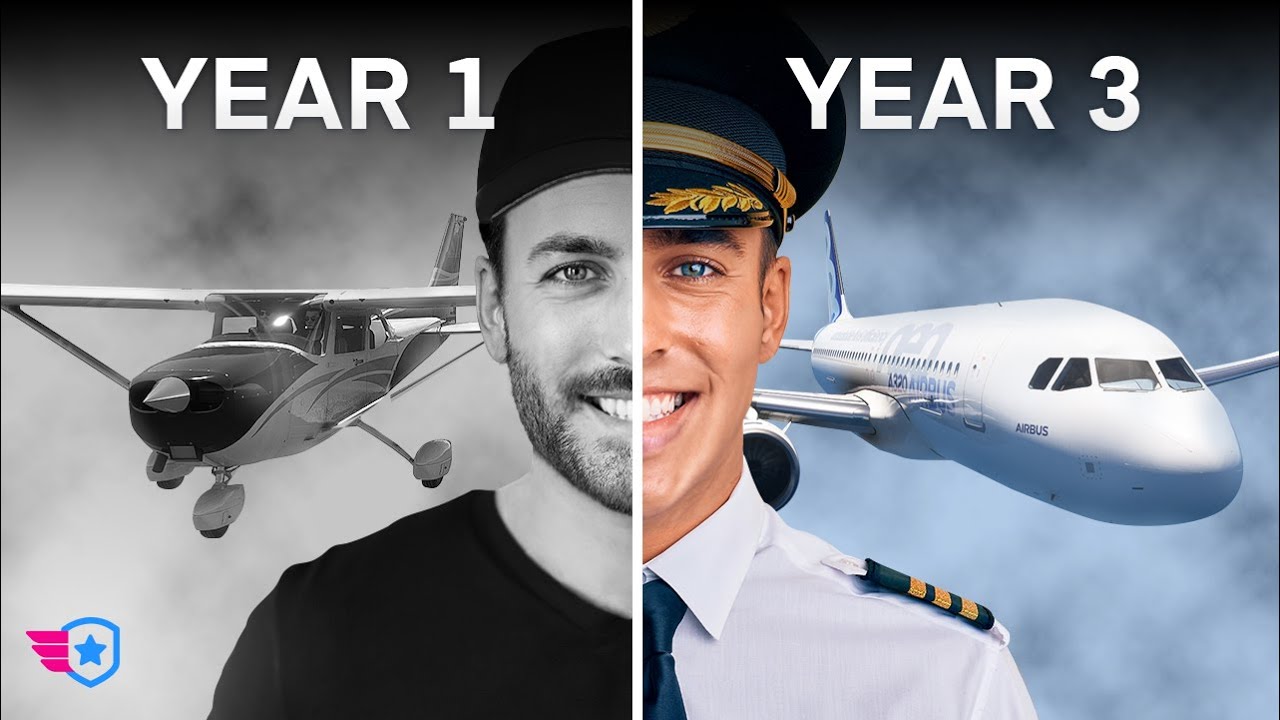
The key, though, is just how the simulator sessions are managed. The session is not just regarding flying. It has to do with briefing clearness and debrief honesty. If the simulator is used to "test" without training, prospects can establish a fragile confidence: they pass the scenario however do not understand what to do when the situation transforms sideways.
On the other hand, when the training is scenario-driven with instructor-guided analysis of what went wrong and why, simulator sessions come to be a laboratory for judgment. In that context, the 737 simulator is not simply an item in a room, it becomes a tool for mentor process.
Two simulators, one functional logic
Public reporting concerning the Locarno Airport site explained 2 simulators. That might sound like an easy matter, yet it has functional consequences.
Two simulators usually implies you can run training without continuous reshuffling. It additionally makes it easier to match various tasks in the same facility, for instance, when one simulator session is established for a particular sort of circumstance while an additional sustains a various phase of candidate progression. In high-volume training settings, "time" is frequently the restricting resource, not educational program design.
Still, more simulators are not instantly far better. 2 simulators can additionally suggest sharper competition for ports. If timetables obtain too limited, trainers may really feel compelled to lower debrief time or reduce situation deepness. That is where the high quality of training management shows up: whether the program secures the learning loophole, or just maintains the wheels turning.
AELO's reported candidate and trainee numbers, plus the forecasted training quantity and fleet scale mentioned for the new website, make it clear that simulator application can not be treated casually. It has to support an intake rhythm that produces grads prepared for airline environments.
Programs that describe why simulators matter
Simulator centers connect to programs, not just to rooms. AELO Swiss Academy states it offers an 18-month ATPL Integrated Program and an MPL program with SkyAlps Airlines. It additionally states a job-guarantee case for the MPL pathway.
Those program frameworks assist discuss why the simulator atmosphere has to support multiple types of progression. Integrated ATPL tracks and MPL pathways often emphasize various competencies, even when the end objective is expert preparedness. When candidates are moving via a longer educational program, the simulator needs to be used as a consistent training system as opposed to a once-in-a-while event.
And when there is an airline-linked path, there is usually extra stress to make abilities transferable. Simulator training comes to be the "bridge" between theoretical understanding and operational flying, which bridge has to withstand various understanding speeds among candidates.
The human side: exactly how simulator training ought to feel
Simulator centers can either shrink people down into "performance," or broaden them into "capability." The distinction frequently appears in just how sessions are structured.
A disciplined training session often tends to have a consistent psychological shape:
- you arrive tranquility, you quick clearly, you fly with intent, you debrief with specifics, you leave understanding what will be different following time.
When the simulator timetable is hectic, that psychological shape is harder to preserve. Individuals get rushed. Feedback becomes general. The debrief becomes a recap instead of a tool.
If you spend time around training operations, you find out to pay attention for the telltales. Instructors who do good work use exact language. Candidates begin asking much better questions. The very same step-by-step error quits reoccuring because it has been clarified in a way that sticks.
Even without entering the cockpit itself, you can see exactly how that technique is built into a center that has high throughput aims. Public reporting priced estimate that AELO trains approximately 110 to 120 airline-pilot candidates each year and about 250 pupils total every year. That scale recommends training is methodical. And methodical training, at its ideal, indicates simulator sessions are not random.
What makes simulator time "stick" (and what does not)
This is where my own training-leaning reactions originate from, not from any single center's interior policies. Simulators can either come to be an echo chamber or a finding out engine, depending on just how they are used.
In areas that obtain it right, simulator time is invested in jobs that disclose the pupil's real thinking: exactly how they scan, how they prioritize, exactly how they deal with shocks, and whether they can recover without becoming reckless.
What does not stick tends to be method without reflection. Traveling a scenario is very easy to repeat, yet repeating does not guarantee improvement. When you do not link a details control input or checklist moment to a result, the situation comes to be a tale you "bear in mind," not a skill you "very own."
Here are the components that typically separate purposeful simulator training from active simulator time:
- Scenario range that stays attached to finding out objectives, not uniqueness for its very own purpose Briefings that name the dangers and the choice points, not just the airplane arrangement Debriefs that isolate a couple of workable repairs, also when the mistakes were numerous Performance standards that correspond from session to session, so progression is measurable
Trade-offs you must notice during a center tour
If you are checking out an academy's simulator area, it is appealing to court by exactly how impressive the spaces look. In practice, the a lot more enlightening signs are operational.
A large simulator room can still produce sub-par training if organizing pressure presses debrief quality. A properly designed curriculum can still disappoint if the simulator sessions come to be also long for attention span or if the trainer responses loop is inconsistent.
At the same time, there is an unavoidable fact that every training organization encounters: when you have 2 simulators and numerous candidate teams, the calendar becomes a juggling act. The most effective academies handle that by developing training obstructs that minimize downtime and make sure prospects obtain coherent developments rather than fragmented sessions.
You can also view just how prospects act around the simulator. Serious prospects have a tendency to deal with the simulator as a professional atmosphere, not a game. They appear planned for briefs. They ask about procedures, not simply outcomes. Their pose in the pre-brief phase often reveals whether the training culture is strong.
Questions worth inquiring about simulator use
You will certainly improve answers if you ask in terms of understanding and functional circulation, not just equipment. During a simulator center walk-through, I would concentrate on just how training sessions are managed, just how feedback is delivered, and exactly how circumstances are chosen.
Here are inquiries that have a tendency to open genuine info without transforming the check out into an investigation:
How are simulator scenarios chosen to match the curriculum development for the ATPL incorporated program and the MPL path? What does the debrief procedure look like, and exactly how quickly do prospects get workable feedback? How do teachers deal with efficiency spaces when candidates are close to completion but still irregular? With two simulators, just how does scheduling secure finding out quality and prevent reducing debrief time? For the Boeing 737 simulator, how does the training stress airline-style procedures and choice making rather than just technological flying?Training pipeline, results, and what simulators need to support
AELO openly suggests that lots of graduates reportedly take place to airlines consisting of KLM, easyJet, Ryanair, and Swiss. That type of reported positioning is not a guarantee, but it frameworks what the training best pilot school in Europe must eventually generate: candidates with airline-credible habits.
A simulator facility needs to sustain those results by training under problems that reveal how prospects behave in the cockpit. It has to instruct people to run checklists under workload, take care of threats without panic, and maintain control discipline.
The reported figures also recommend the academy's simulator atmosphere is utilized at meaningful range, not as a side feature. With hundreds of pupils yearly and a pipeline of airline-pilot prospects annually, simulator sessions have to be repeatable in quality, not just reliable occasionally.
In an adventurous spirit, it is simple to think romantically trip training as a mission for the cabin. Yet the simulator is where the pursuit becomes structured and measurable. It is where candidates learn to deal with issues as solvable, due to the fact that they have actually been trained to do it prior to the effects exist in the genuine world.
Beyond the simulator: the broader training environment
Simulator facilities do not exist alone. AELO states it is part of Ruby Aircraft's international Diamond Authorized Training Center network. That suggests an arranged training community, where functional techniques and training framework belong to a bigger network.
AELO also mentions equal-opportunity criteria and restricts discrimination based on gender, race, religious beliefs, age, or nationwide beginning. Those dedications issue in training settings because simulator understanding is extreme and identity-neutral professionalism and reliability is important. Teachers and training leaders need trainees focused on knowing, out barriers.
Together, these information suggest of an academy that intends to construct a consistent training culture, where simulator rooms are staffed and handled within broader operational systems.
The experience inside the training room
The adventurous part of aviation is commonly marketed as perspective chasing, climate valor, and cabin self-confidence. Simulator training offers a quieter version of that adventure.
It is the difficulty of remaining calm while systems differ with your expectations. It is the work of making an appropriate choice while you are still discovering the rhythm of airline procedures. It is the minute you understand that "touchdown well" is not just an attitude, it is a chain of choices made earlier.
AELO's simulator centers, based upon openly explained details, consist of two simulators with a Boeing 737 simulator at its Locarno Flight terminal site. That combination, plus the academy's stated training programs and reported trainee and prospect numbers, recommends the simulator location plays a central role in exactly how AELO relocates people with airline-relevant readiness.
If you wish to comprehend a pilot training academy, look very closely at the simulator rooms. Not since they are attractive, however since they subject the truth of the training ideology. When the scenarios are challenging and the comments is sharp, the simulator comes to be more than a maker. It ends up being a rehearsal area for judgment, for team effort, and for the type of calm skills airlines expect.
And that is the actual reason individuals walk into a simulator center feeling a little worried. They recognize the door closes for a few minutes, after that opens on a different variation of themselves.